For years, assessment in many schools meant one thing: end-of-term exams. A learner could struggle quietly for eleven weeks and only be found out when it was far too late to help. Continuous Assessment (CA) exists to close that gap — but it only delivers on its promise when the day-to-day data is painless to record and genuinely useful to read.
Why continuous assessment matters
Continuous assessment spreads judgement across the whole term instead of betting everything on a single sitting. It rewards consistency, catches misunderstandings early, and gives parents a running view of progress rather than one dramatic verdict.
- Early warning: a dip in scores shows up in week three, not week eleven.
- Fairer results: a bad exam day no longer erases a term of solid work.
- Richer feedback: teachers can point to specific tasks, not just a final grade.
The problem with doing it on paper
The idea is sound; the admin is brutal. Mark registers get lost, weighting is calculated by hand, and combining CA with exam marks at the end of term turns into a weekend of spreadsheets. The effort is so high that many schools quietly give up and fall back on a single exam.
How Skolastik makes it work
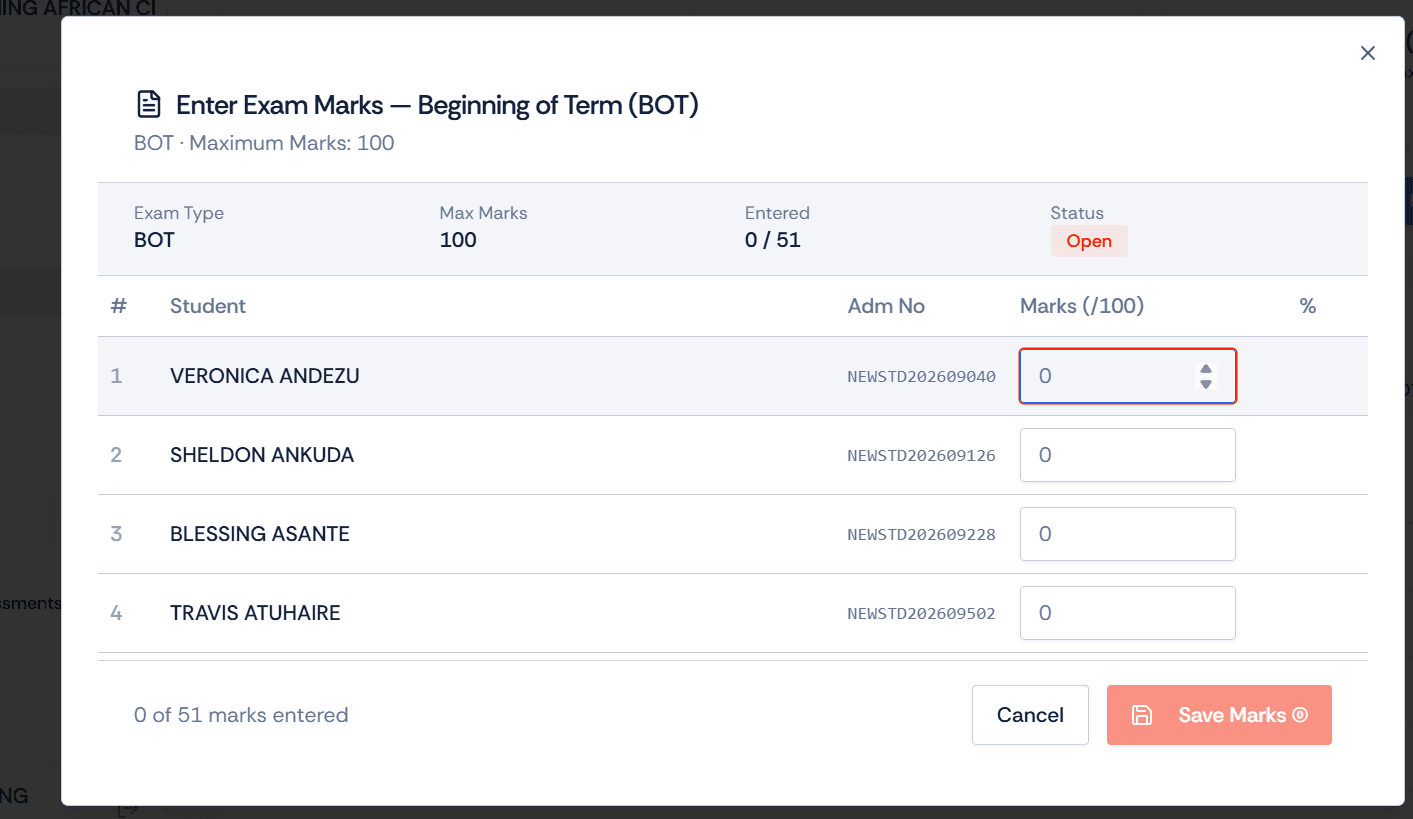
Skolastik treats each assessment as a first-class record. Teachers enter marks per activity as the term runs, assign a weight once, and the system does the rest — rolling CA and exam scores into the final result automatically, with the weighting applied consistently for every learner in every class.
- Record quizzes, homework, practicals and projects against each subject.
- Set the CA-to-exam ratio once; it applies across the stream.
- See per-learner trend lines so interventions happen on time.
- Marks flow straight into report cards — no re-entry, no copy-paste.
Getting started
Start small: pick one or two assessment types per subject this term and record them consistently. Once teachers see the trend lines build, expanding coverage is easy. The goal is not more marking — it is making the marking you already do visible and useful.